
In this article
- What is BPPV?What is BPPV?
- What causes BPPV?What causes BPPV?
- What are the symptoms of BPPV?What are the symptoms of BPPV?
- How is it diagnosed?How is it diagnosed?
- How do we treat BPPV?How do we treat BPPV?
- Can BPPV go away on its own?Can BPPV go away on its own?
- Can a physiotherapist treat vertigo or BPPV?Can a physiotherapist treat vertigo or BPPV?
What is BPPV?
BPPV stands for benign paroxysmal positional vertigo. It is a problem that starts inside the inner ear.
Inside the inner ear sits the peripheral vestibular system. It has two sets of structures, the semicircular canals and the otolith organs, and together they tell the brain how we are moving in space.
The otolith organs, the utricle and the saccule, pick up linear motion: forward and back, side to side, up and down. The semicircular canals are the canals the fluid moves through. As the head moves, the fluid displaces, and that tells the brain how we are moving in space.
Two parts of the inner ear tell the brain how you're moving
Otolith organs
The utricle and saccule
Straight-line movement: forward, back, side to side, up and down.
Semicircular canals
Where the fluid moves
Fluid moves through them and it displaces. That tells the brain how we're moving in space.
Inside the utricle, tiny hair cells sit with crystals on top, called otoconia. The otoconia are meant to stay in the utricle, outside the semicircular canals. Sometimes these crystals come loose and fall into the semicircular canals. That is BPPV. A crystal moving through a canal on one side sends the brain a signal that does not match the other side, and the brain gets confused about how we are moving in space.
Say the crystal has fallen into the posterior canal. It stimulates the same nerves that run to the muscles around the eye, so we see nystagmus, an involuntary movement of the eye. The direction of that movement tells us which canal the crystal is in, and that tells us how we can help.
How the crystals end up in the wrong place
Where they belong
Little hair cells with crystals on top, called otoconia. They're meant to sit in the utricle, outside the semicircular canals.
What goes wrong
The crystals fall off and into a semicircular canal.
What you feel
The brain gets confused by competing signals. The unaffected side says we aren't moving and the side with the crystal says we are.
What we see
Nystagmus, an involuntary movement of the eye. It tells us which canal the crystal is in.
What causes BPPV?
It's the crystals inside the inner ear, and they're getting dislodged. We don't know why this happens. There are risk factors: if you're diabetic, or if you've got low bone mineral density. But we don't know why it happens.
What are the symptoms of BPPV?
Usually, it's what we would call true vertigo, or the world spinning, or that rotary vertigo. Typically, it's when people change position: when they get in and out of bed first thing in the morning, or sometimes if you go from sitting to standing.
In general, though, you'll feel a little bit off, what we would call disequilibrium. Just not quite right. That's because there's a problem with one vestibular system over the other one, and we've got this mismatch between our left and our right sides.
When it hits, and what it feels like in between
The spin
True vertigo. The world spinning. It comes on when you change position: getting in and out of bed first thing in the morning, or going from sitting to standing.
In between
A little bit off. Disequilibrium. Just not quite right. One side of the vestibular system isn't matching the other.
How is it diagnosed?
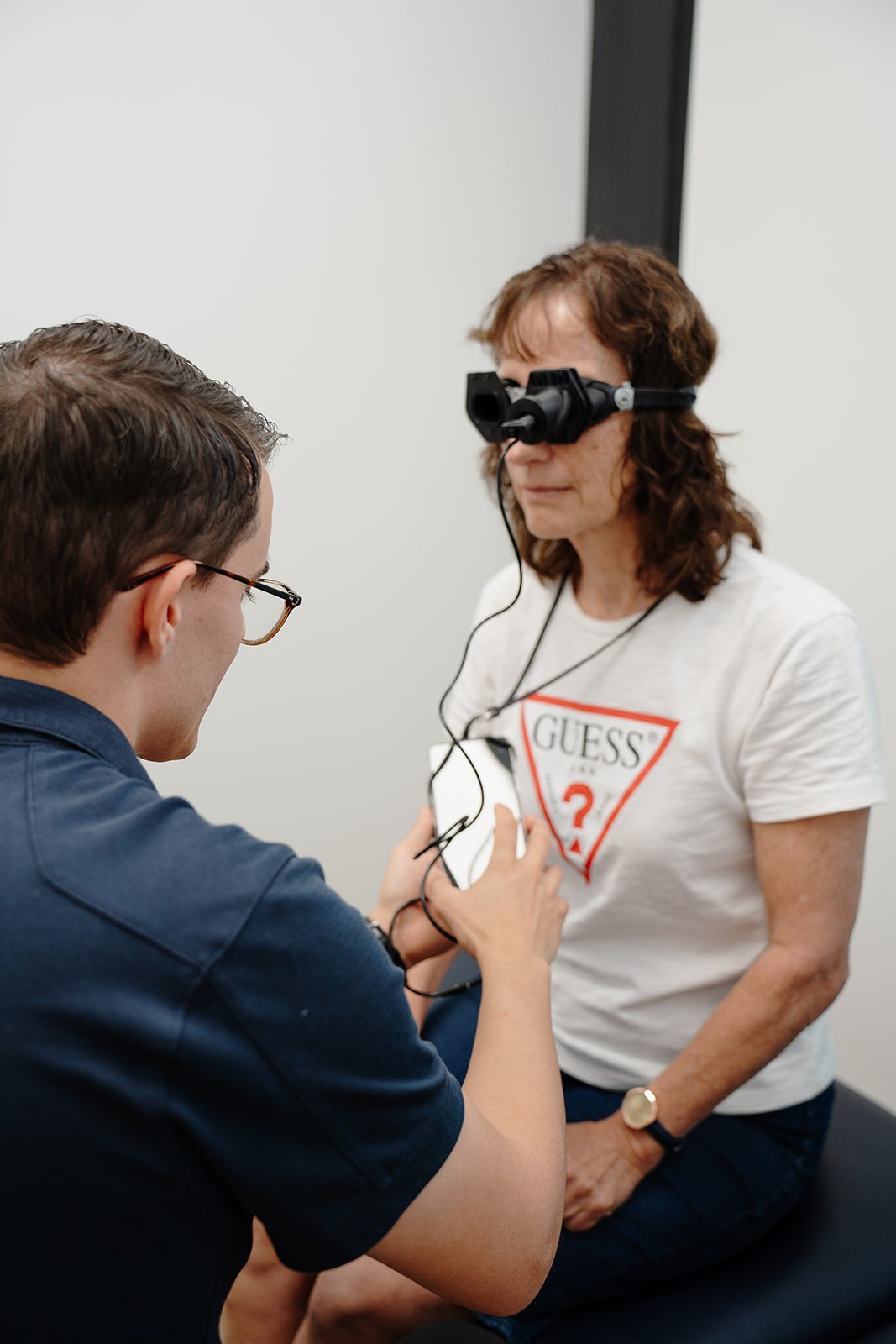
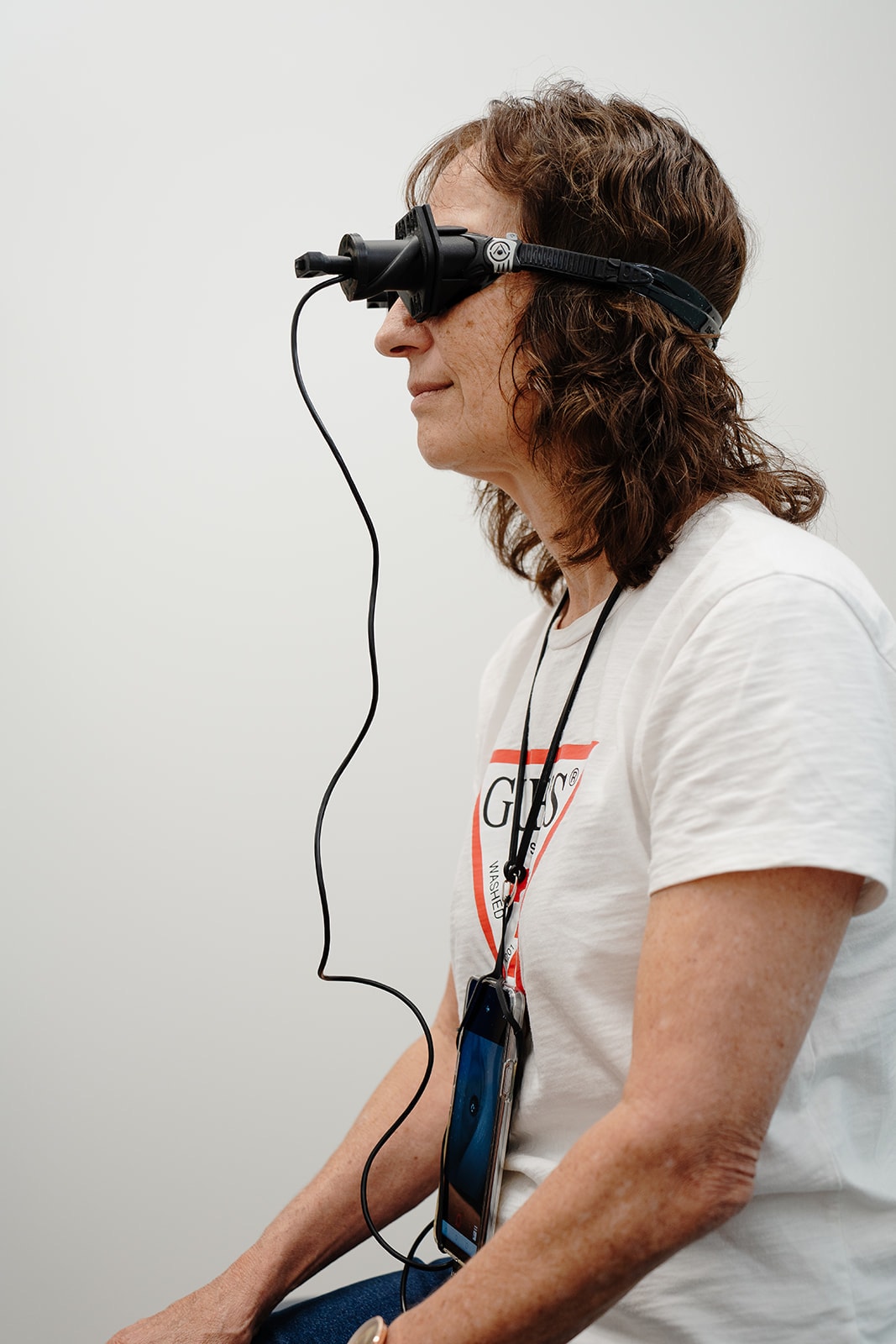
We use VestiCam goggles, which are vision-denied goggles with a small camera inside. In normal light you can fixate on a point, and the muscles around the eye hold it still, the same way you can brace the muscles around a joint to stop it moving. Inside the goggles you are in complete darkness, so the eye cannot fixate and the testing becomes far more sensitive.
The roll test checks the horizontal canals.
How do we treat BPPV?
The first step is making sure that we know what canal it's in, which we can with the VestiCam goggles. They're very, very sensitive.
From there, we'd use an Epley manoeuvre for the posterior canal, or we would use a Gufoni or a BBQ roll for the horizontal canal.
First find the canal. Then the manoeuvre follows.
Posterior canal
Epley manoeuvre
Horizontal canal
Gufoni manoeuvre or BBQ roll
We find the canal with the VestiCam goggles before we do anything else.
Can BPPV go away on its own?
Yes, it can. It can settle by itself and automatically relocate.
But typically, if you do have it, what we would recommend doing is getting it properly assessed. What can happen is you might have a posterior canal BPPV, and then by trying to relocate it yourself, you can convert it to a horizontal canal BPPV, and then you've got crystals in multiple canals. That can feel very awful, and it is a little bit harder to treat as well.
Leave it, or get it looked at?
If you leave it
It can settle by itself and automatically relocate.
If you try to fix it yourself
A posterior canal BPPV can turn into a horizontal canal BPPV. Then you've got crystals in multiple canals. That can feel very awful, and it's a little bit harder to treat.
What we'd recommend is getting it properly assessed.
Can a physiotherapist treat vertigo or BPPV?
Yes, absolutely. Physiotherapy is the frontline treatment for BPPV. We can accurately assess it with our VestiCam goggles, and we can make sure that you're getting the right treatment.
The other reason is that when you have spontaneous vertigo that comes on from nowhere, that can be a really strong sign of potentially a stroke or some sort of interruption.
Making sure that you can get seen and assessed by a vestibular physiotherapist can mean that we can rule out any of the sinister or central signs that we would see, and we can make sure that it is peripheral. And if it is peripheral, we can classify what it is.

By Zac Cronk, Director and Senior Physiotherapist